Round designer table – why is it returning to interiors in 2026?
In recent years, round tables have made a noticeable comeback in interior design. Interior designers choose them not only for their aesthetics but also for their functionality. A designer round table brings harmony to an interior, encourages conversation, and becomes a central element of the arrangement.
Modern table models increasingly feature a sculptural form – making them not only functional but also decorative.
Table of Contents
- Why is a round table so popular in interiors?
- A round table as the central element of an interior
- Metal bases – a trend in table design
- Dazza tables – a modern interpretation of the round table
- Where is a round table best suited?
- Dazza tables – three variants for different arrangements
- A designer table as an element of interior style
Why is a round table so popular in interiors?
Round tables are currently experiencing a true comeback in interior design. Their popularity stems from several reasons.
First and foremost, the round shape encourages conversation. At such a table, everyone sits an equal distance from each other, creating a more natural atmosphere for gathering.
The second reason is aesthetics. Round shapes introduce the following into an interior:
- softness
- harmony
- visual balance
Therefore, tables of this type work great in dining rooms, restaurants, and hotel lobbies alike.
A round table as the central element of an interior
In modern interior arrangements, the table increasingly serves as the central focal point of the space. This is particularly true for designer tables with a distinctive form.
Interior designers often use round tables in:
- living rooms connected to dining areas
- open-plan apartments
- premium restaurants
- hotel lounge areas
Thanks to its form, a round table can serve both practical and decorative functions.
Metal bases – a trend in table design
One of the most important trends in contemporary furniture design is the use of metal structures. Metal gives furniture a modern character and allows for the creation of more sculptural forms.
Tables with metal bases are valued for their:
- durability
- structural stability
- modern appearance
- elegant character
As a result, they are perfectly suited for both residential and commercial spaces, such as restaurants or hotels.
Dazza tables – a modern interpretation of the round table
Dazza tables available at AlmiDécor perfectly fit the trend of modern, designer tables.
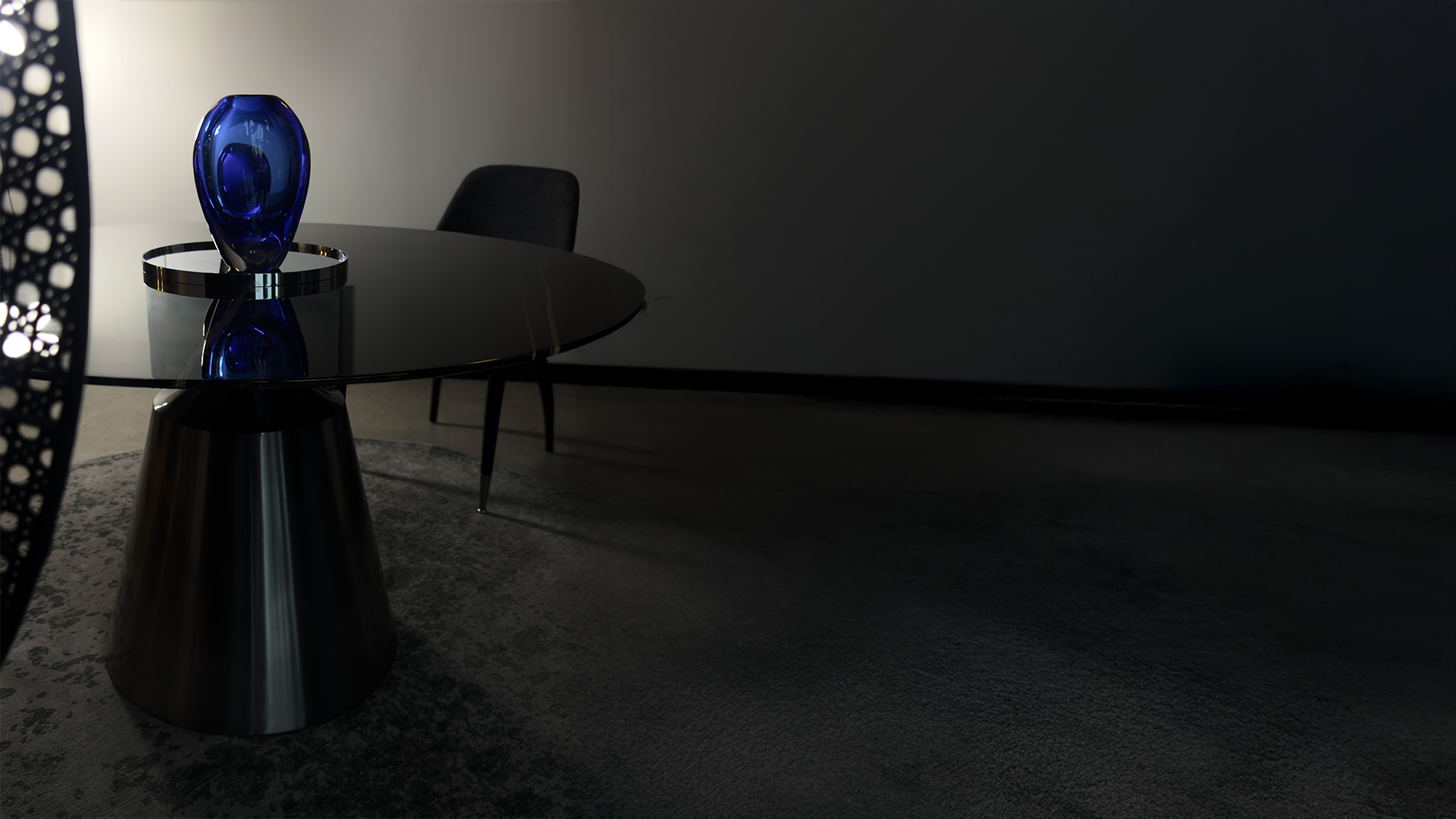
Their most characteristic element is a metal base in the shape of a truncated cone, which gives the furniture a sculptural character. A slender top set on such a base creates an elegant and balanced composition.
This form makes the table resemble a modern sculpture, which simultaneously remains a fully functional piece of furniture.
Where is a round table best suited?
Round tables are very versatile and can be used in various types of interiors.
They most often appear in:
- modern dining rooms
- elegant living rooms
- restaurants
- hotel lobbies
- premium apartments
Thanks to their form, they blend well with many styles of arrangement – from minimalist to more luxurious interiors.
Dazza tables – three variants for different arrangements
The Dazza table collection available at AlmiDécor includes three variants that allow the furniture to be adapted to the character of the interior.
Dazza White
A light model, ideal for modern interiors and elegant hotel spaces.
Dazza Large Black
A distinctive version with a dark top, perfect for premium restaurants and stylish apartments.
Dazza Large White
A larger version of the table in a light finish – great for spacious dining rooms and representative interiors.
A designer table as an element of interior style
Contemporary furniture increasingly plays the role of elements that define the character of a space. A designer table can become the focal point around which an entire interior arrangement is built.
Models with a distinctive form, such as Dazza tables, perfectly fit this trend, combining elegance, functionality, and modern design.