Which upholstery fabric should you choose? Types of upholstery materials
Upholstery fabrics differ not only in appearance, but also in softness, durability, and care requirements. That is why the fabric for a sofa, armchair, or chair should be treated as an important element of interior design – it affects the perception of the piece, its comfort, and durability. If you are wondering which upholstery fabric to choose, pay attention to the texture, composition, performance specifications, ease of cleaning, and how the material looks in daylight and evening light, as well as how it complements the character of the interior.
Table of Contents
- Types of upholstery materials – how do the most popular fabrics differ?
- Velvet, chenille, bouclé and woven fabric – what effect will you achieve on the furniture?
- Choosing upholstery for a sofa, corner sofa, armchair and chair
- Furniture upholstery fabric – what specifications indicate its durability?
- Types of upholstery fabrics – easy care and comfort in a home with pets
- How to assess a sample? Types of upholstery materials in practice
- Furniture upholstery fabric – how to choose the color and texture for the interior?
- How to combine different upholstery fabrics in one interior?
- Which upholstery fabric to choose? The most important rules at the end
Types of upholstery materials – how do the most popular fabrics differ?
The most frequently chosen types of upholstery materials are velvets, chenilles, woven fabrics, bouclé, knitted fabrics, flock, and faux leather. Each material creates a different effect. Velvet brings softness and a subtle play of light, chenille gives an impression of coziness, woven fabric showcases the weave, and bouclé catches the eye with its three-dimensional texture. Individual materials also drape differently on the furniture piece – some emphasize its soft lines, while others better showcase its geometric form. The way the fabric reacts to light and intensive use is also important. Therefore, furniture upholstery fabric should not be chosen solely by color – its texture, purpose, and daily use are equally important.
Velvet, chenille, bouclé and woven fabric – what effect will you achieve on the furniture?
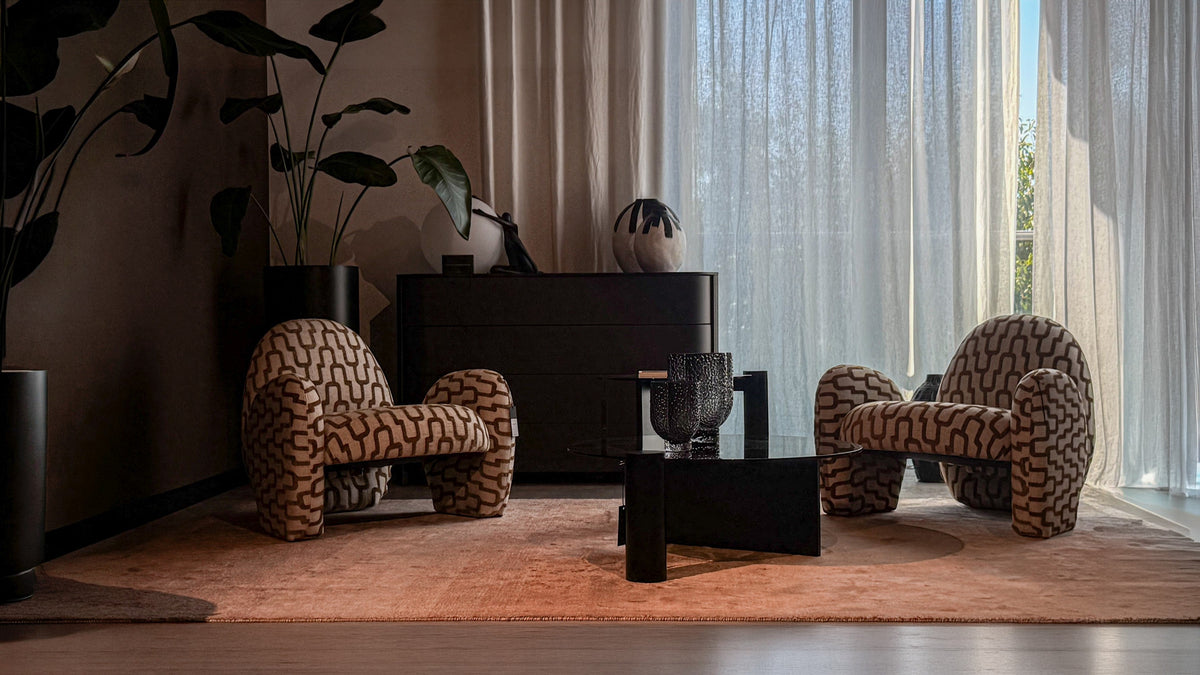
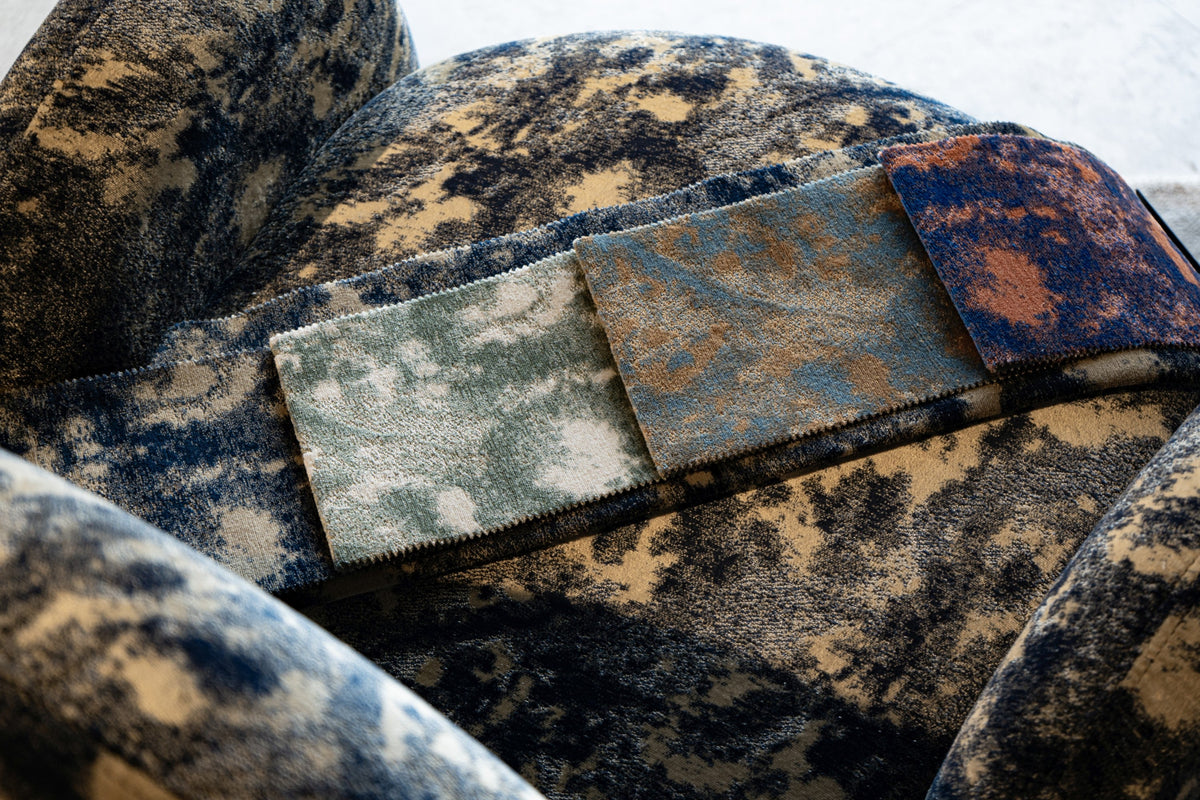
Velvet works well on shapes we want to add elegance, depth, and a delicate sheen. Chenille is soft and pleasant to the touch, and its more visible texture looks good on larger surfaces. Bouclé, with its characteristic loops, emphasizes rounded shapes and therefore looks striking on designer armchairs. Woven fabrics are usually more matte and visually calmer, making them suitable for both contemporary and classic interiors. If you are interested in furniture upholstery fabric, view the sample in both daylight and artificial light. The direction of the fibers, sheen, and weave density can significantly change the perception of the same color.
Choosing upholstery for a sofa, corner sofa, armchair and chair
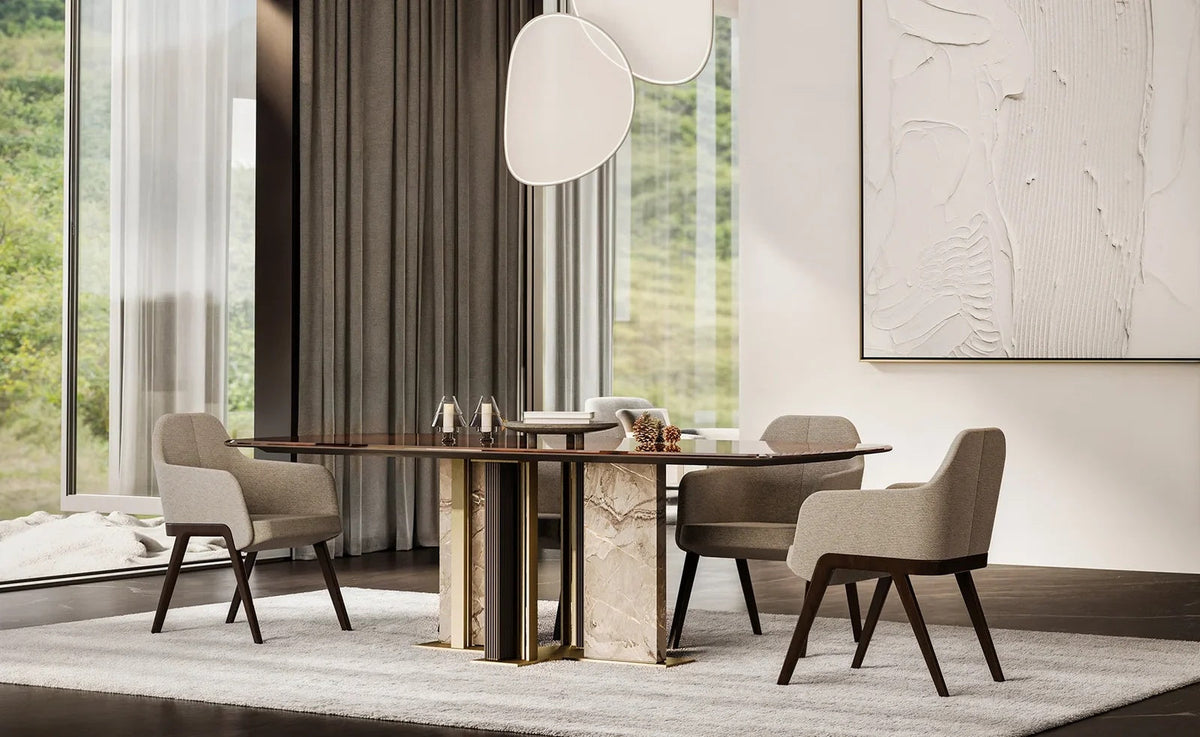
The choice of material also depends on the construction and use of the furniture. Large designer sofas beautifully showcase calm chenilles, velvets, and structural woven fabrics. Exclusive corner sofas need a material well suited for intensive use of the seats, while for chairs, ease of care and surface resistance to abrasion are particularly important. If you are choosing elegant chairs, it is worth ensuring that the upholstery is not only decorative but also comfortable to the touch. Furniture upholstery fabric should emphasize the proportions of the piece – the more pronounced the form, the more carefully you should balance the color and texture.
Furniture upholstery fabric – what specifications indicate its durability?
Appearance is only the first stage of selection. One of the parameters used to assess fabrics is the Martindale test result, which indicates abrasion resistance. However, it is not worth analyzing it in isolation from other characteristics: resistance to pilling, rubbing and light, and weave stability. Individual collections have different properties – for example, bouclé Ness achieves over 90,000 Martindale cycles, while chenille Tulia New achieves 100,000 cycles. Good furniture upholstery fabric should have specifications that correspond to the actual way the furnishings are used. We expect different properties from an occasionally used armchair than from a family sofa in the center of the living room.
Types of upholstery fabrics – easy care and comfort in a home with pets
In a living room used every day, the functionality of the upholstery quickly becomes as important as its color. AlmiDécor uses Magic Home solutions in selected collections, including easy cleaning with water, reduced liquid absorption, and pet-friendly properties. Fabrics marked as Pet Friendly are tested for snag resistance, and many of them also make it easier to remove pet hair. If you are choosing elegant lounge furniture for a home with children or pets, such properties can be of great practical importance. You do not have to give up a decorative texture – functional solutions are also available among chenilles, bouclé, knitted fabrics, and woven fabrics.
How to assess a sample? Types of upholstery materials in practice
Even a good photo does not fully show the softness, the scale of the weave, or the way the upholstery reflects light. Therefore, individual fabrics are best compared on actual samples and paired with wood, stone, rugs, or wall colors. It is also worth paying attention to how the material behaves when the viewing angle and lighting change, because some velvets or chenilles can subtly change shade. It is also important whether the fabric texture harmonizes with the size and line of the furniture and the other materials present in the interior. Before making a decision, it is worth:
- viewing the shade in the morning, in daylight, and in the evening;
- checking the softness and nap direction by hand;
- assessing whether the weave scale corresponds to the size of the piece;
- reading the cleaning and care instructions;
- comparing the specifications with the expected intensity of use.
The material and furniture can also be assessed in person by visiting the AlmiDécor Showroom in Warsaw, which makes it easier to consciously combine textures, colors, and proportions.
Furniture upholstery fabric – how to choose the color and texture for the interior?
The chosen material should complement not only the piece itself, but the entire interior composition. The same beige on smooth velvet will reflect light differently than on looped bouclé, and a mélange woven fabric may hide minor signs of use more subtly than a material with a uniform surface. Light upholstery visually softens heavier forms, dark upholstery emphasizes their contours, while a bold color can turn an armchair or sofa into the main accent of the interior. It is also worth considering the color temperature of the wood, stone, and metal. If you want a cohesive effect, choose the upholstery only after determining the palette of the entire room, rather than as a separate decoration.
How to combine different upholstery fabrics in one interior?
Combining different textures gives the interior depth, but requires moderation. Smooth velvet can create an interesting contrast with bold bouclé, while chenille pairs well with a more raw woven fabric. However, you do not need to upholster all elements in the same material. A sofa can provide a calm base, while an armchair can be a stronger accent in texture or color. It is worth maintaining a common denominator, such as a similar color temperature or a repeating shade. Such a planned combination ensures that individual pieces of furniture remain autonomous while creating a harmonious whole. This is especially important in spaces where the furnishings are meant to build character without looking haphazard.
Which upholstery fabric to choose? The most important rules at the end
Well-chosen upholstery should simultaneously fit the form of the furniture, harmonize with the interior, and meet the daily needs of the residents. Instead of being guided solely by color, it is worth comparing the texture, care method, resistance to use, and how the material behaves in specific lighting. If you are still wondering which upholstery fabric to choose, start by determining how intensively the furniture will be used and what effect it is meant to create in the interior. Check our offer and choose a sofa, corner sofa, armchair, or chair whose form and upholstery will create a thoughtful, elegant composition.