What color garden furniture should I choose?
The colors of garden furniture determine whether the patio will look light, modern, natural, or more representative. The color of the table, armchairs, and sofa influences the perception of the entire relaxation area, which is why it is worth choosing it with the same care as living room furnishings. The facade, flooring, amount of light, garden greenery, and the residents' lifestyle all play a role. A well-chosen palette does not dominate the surroundings but organizes the space and makes the outdoor area a coherent extension of the home.
Table of Contents
- Garden furniture colors and house architecture
- Which garden furniture color suits your chosen arrangement style?
- Light patio furniture – subtlety, space, and timeless elegance
- Dark colors, graphite, and anthracite – a distinctive modern patio
- How to combine garden furniture colors without overwhelming the space?
- The scale of the set matters – color should support the patio's function
- Summary
Garden furniture colors and house architecture
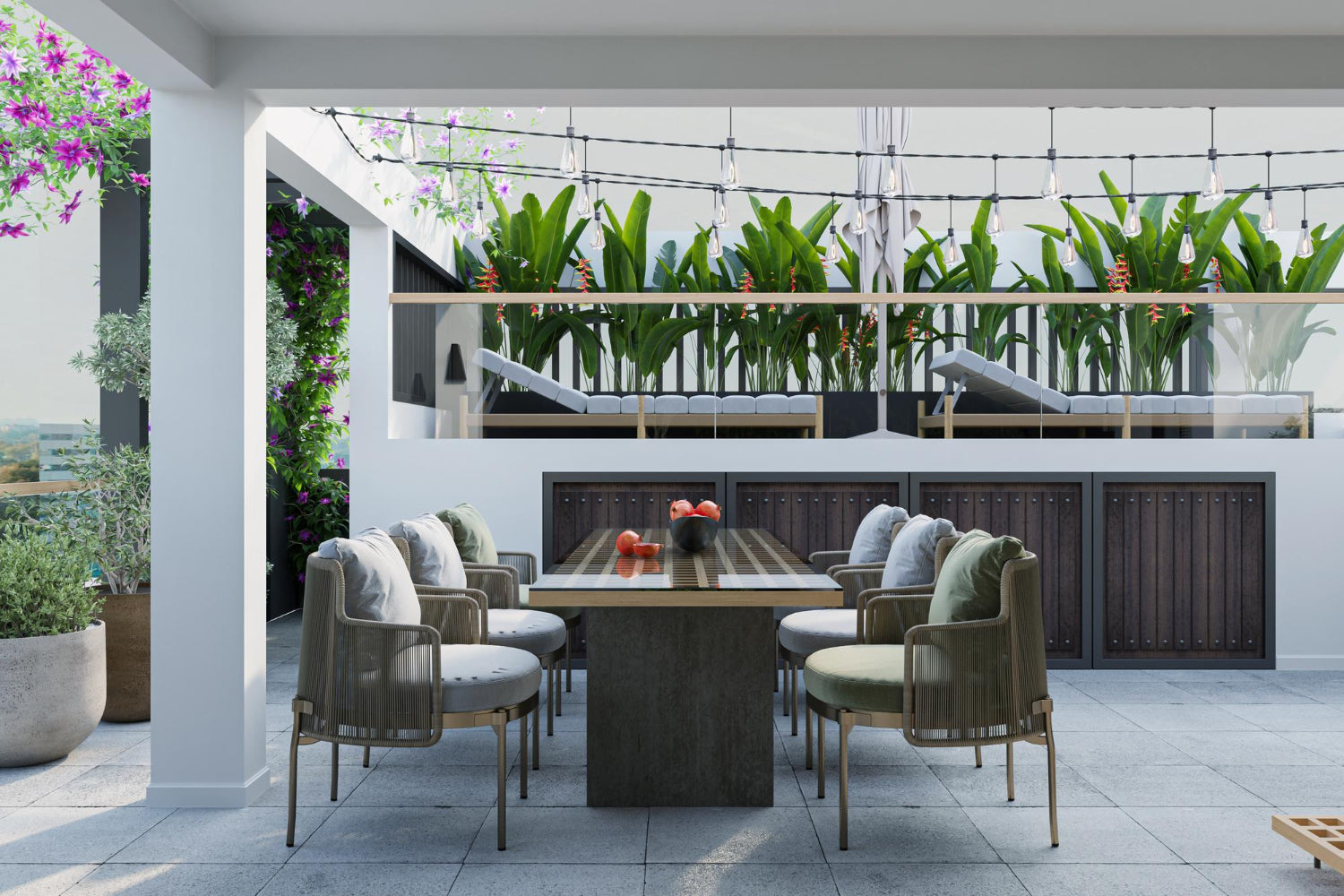
The decision of what color patio furniture will be best should start with observing the building's structure and the materials already present in the space. With a light facade, beiges, taupes, warm grays, and wood look beautiful, as they emphasize the calm, timeless character of the arrangement. With graphite windows, concrete slabs, or a black pergola, you can opt for a stronger accent, but it is worth maintaining balance. A south-facing patio intensely exposes colors, so dark sets will look more distinct. In the northern zone, lighter tones work better, adding freshness and not overwhelming the garden's relaxation area. Daily habits are also important – for frequent gatherings, it's worth choosing colors that are easy to combine with textiles and tableware.
Which garden furniture color suits your chosen arrangement style?
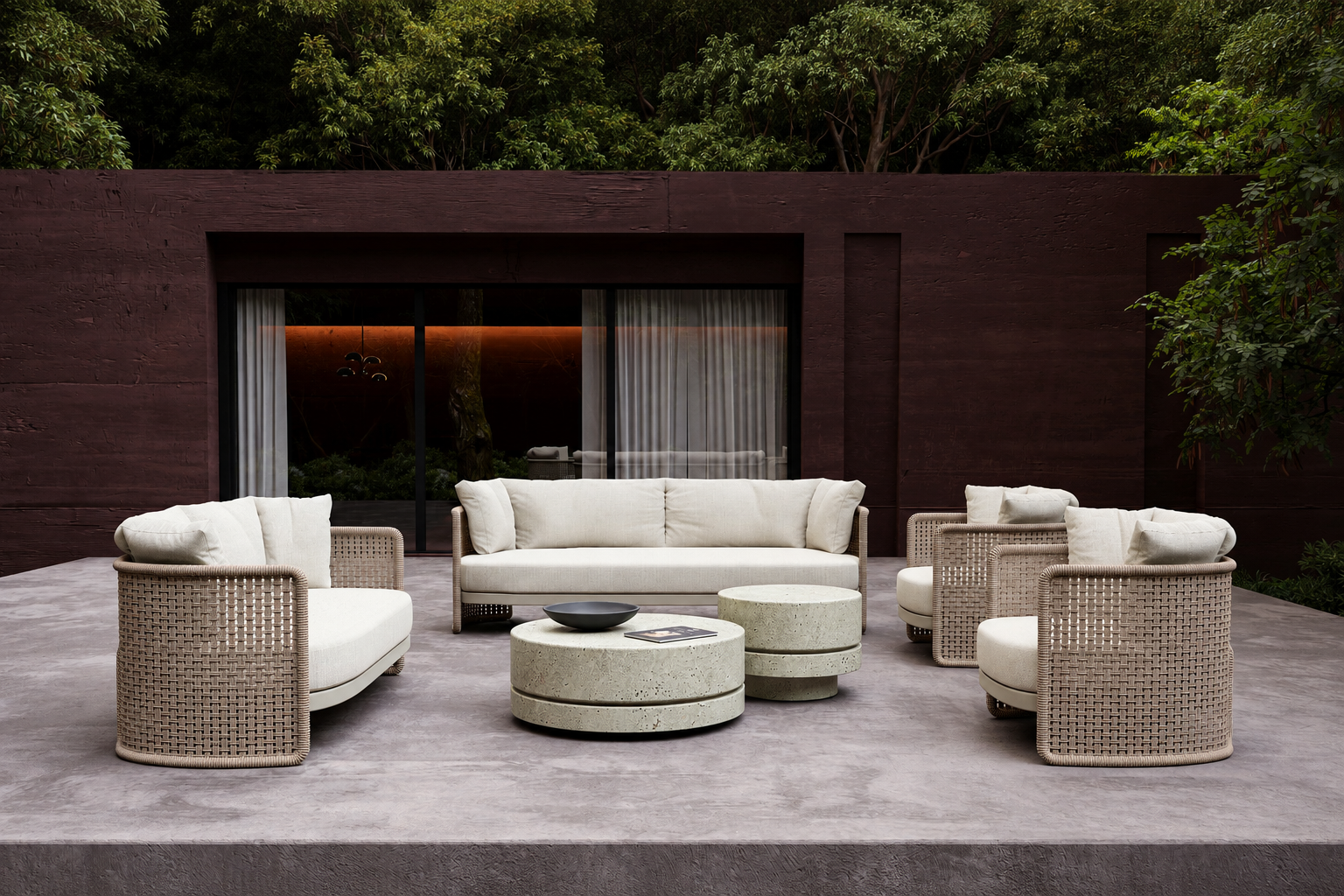
If you are wondering what color garden furniture to choose, pay attention to the character of the entire property. A modern house tolerates the contrast of black, graphite, and light stone well, while classic or villa arrangements prefer cream, olive gray, brown, and nature-inspired colors. In Mediterranean style, tones of sand, linen, and terracotta work well, and in a naturalistic garden, earth tones are best. A visit to the AlmiDécor Showroom in Warsaw helps to assess proportions, textures, and colors in a real setting, making it easier to avoid accidental combinations and choose furnishings consistent with the character of the house. It is worth avoiding too many strong tones at once, as the patio should be visually relaxing, not competing with the garden.
Light patio furniture – subtlety, space, and timeless elegance
Light patio furniture is a good choice when the space is meant to look fresh, calm, and visually light. Beige, ecru, ivory, and off-white visually enlarge the patio, reflect light well, and combine beautifully with greenery. Beige garden furniture is particularly versatile, as it warms up the arrangement without sacrificing elegance. It is worth combining them with natural accessories, such as ceramics, wood, sage-colored cushions, or patio rugs, which define the relaxation zone. If you are looking for a noble, calm effect, teak garden furniture will also be an excellent reference point. A light base handles seasonal changes well, so a few accessory changes are enough to give the space a more vacation-like or elegant mood.
Dark colors, graphite, and anthracite – a distinctive modern patio
A dark palette creates an orderly, elegant, and very contemporary effect. Graphite, black, and anthracite garden furniture look good with large glazing, simple structures, and minimalist surfaces. Such sets look best when they have breathing room around them: light flooring, soft textiles, greenery, and accessories that break the severity. If you are wondering what color garden furniture will be appropriate with a dark facade, choose a shade slightly lighter than the joinery or pergola. This way, the furnishings will not blend with the background, and the patio will maintain elegant depth. Additionally, in the AlmiDécor offer, you will find light cushions, tables, and decorations that will add lightness to the composition.
How to combine garden furniture colors without overwhelming the space?
A well-planned palette is based on proportions. It is safest to choose one dominant color, one complementary tone, and one decorative accent. This arrangement organizes even a larger patio and allows for easy changes to the character of the arrangement with accessories. It is also worth remembering that the color of furniture looks different in full sun than in the evening or in the shade of a pergola. Therefore, material samples, cushions, and accessories are best evaluated directly in the place where they will be used. Before purchasing, it is worth analyzing:
- the shade of the facade, window frames, and railings;
- the color of the boards, tiles, or stone on the patio;
- the amount of sun and natural shade;
- the colors of pots, plants, and textiles;
- the style of the living room adjacent to the patio.
Consistency provides the best effect: if the furniture is distinctive, the accessories should be calmer, and with a neutral base, you can opt for a stronger detail. In practice, this means that the most expensive and largest elements should be as timeless as possible, and more daring accents should be left to accessories.
The scale of the set matters – color should support the patio's function
The color should match not only the style but also the size of the set. A large corner sofa in a dark tone can look impressive, but it will become too dominant in a small space. In such a situation, it is better to choose medium or light shades, especially if modular garden furniture is planned, which can be freely rearranged and expanded. If you are wondering what color patio furniture will be most flexible, opt for a neutral base and changeable accessories. Light patio furniture can be easily complemented with cushions, a throw, or a table in a contrasting shade, and elegant garden furniture will gain an individual character thanks to this. This approach is particularly practical when the patio serves several functions: a place for morning coffee, summer dinners, and peaceful relaxation after work.
Summary
The choice of garden furniture color should combine aesthetics, function, and the atmosphere of the place. Light shades add lightness, dark ones create a modern rhythm, and wood introduces natural warmth. The best effect is achieved when the furniture, flooring, facade, plants, and accessories form one well-thought-out composition. It is worth looking at the patio as an open-air living room – comfortable, refined, and consistent with everyday life. Take advantage of our offer to choose furnishings that will help create a space with character, elegant in perception, and pleasant to use.