Colors and Types of Marble - Applications and Properties
The colors of marble can completely change the perception of an interior – brightening it, warming it up, adding depth, or introducing a distinct contrast. This natural stone has been associated with elegance for centuries, but in contemporary designs, it doesn't have to mean cold opulence. It's enough to choose the right shade, veining, and scale of application for marble to become a subtle accent or the main focal point of a composition. It's worth getting to know the types of marble, their colors, and how they harmonize with furniture, light, and textures present in the home.
Table of Contents
- Marble Colors – A Natural Palette That Builds Interior Character
- What is Marble and Why Does Every Piece Look Different?
- How is Marble Formed and What Does It Say About Its Properties?
- The Most Beautiful Types of Stone for Elegant Designs
- How Does Marble Look in Different Interior Styles?
- Where Does Marble Look Best in the Home?
- How to Choose Stone Color for Furniture and Decorations?
- Marble in Furniture – Beauty with an Everyday Function
- How to Consciously View Marble Before Choosing?
- Summary
Marble Colors – A Natural Palette That Builds Interior Character
Marble is never one-dimensional. Its beauty lies in nuances: milky white, pearly grey, warm beige, deep brown, mineral-like green, and black cut through with a light pattern. Marble colors should be chosen like fabric, wood, or metal – with light, proportions, and the mood of the interior in mind. Light varieties bring calm and lightness, making them well-suited for modern classic living rooms and minimalist dining rooms. Dark slabs are more theatrical, while beige and brown create an effect of soft, elegant coziness.
What is Marble and Why Does Every Piece Look Different?
To consciously choose stone for an interior, it's worth knowing what marble is. It's a natural rock formed from limestone under immense pressure and temperature. This process results in characteristic veins, streaks, and tonal transitions appearing in the stone's structure. In practice, this means that two countertops of the same variety can differ in pattern arrangement, background intensity, and color proportion. This uniqueness is precisely what makes marble bring a sense of authenticity to an interior. It is not an perfectly replicated decoration – it is a detail that has its own rhythm.
How is Marble Formed and What Does It Say About Its Properties?
How is marble formed? The stone is born deep in nature, and its structure is the result of a long transformation of limestone. This allows it to be hard, stable, and exceptionally decorative, but it also requires proper care. Marble has highly valued properties in design: it withstands pressure well, beautifully reflects light, and gives surfaces a noble appearance. At the same time, it dislikes acids, strongly staining liquids, and aggressive detergents. Countertops should therefore be cleaned gently, and coasters should be used under cups, vases, and candles. It is best to use a soft cloth and products designed for natural stone.
The Most Beautiful Types of Stone for Elegant Designs
The most popular types of marble differ not only in color but also in temperament. Carrara is light, calm, and slightly cool, with delicate grey veining. Calacatta can be more luxurious in perception, as it has a stronger, often golden or graphite pattern. Nero Marquina is deep black with contrasting white, ideal for glamorous and modern interiors. Emperador introduces browns and coffee tones, while Crema Marfil gives a warm and classic effect. Verde Guatemala, with its mineral-deep green, looks best as a consciously chosen accent. Each variety reacts differently to light, so it should be evaluated in the context of the entire design.
How Does Marble Look in Different Interior Styles?
How marble looks depends on what it is combined with. In minimalist designs, light varieties with calm veining work best, paired with simple furniture lines and understated details. In classic styles, beiges, creams, and browns look beautiful, harmonizing well with wood, velvet, and soft lighting. Glamorous interiors can allow for the contrast of black, gold, and shine. In contemporary designs, marble is combined with metal, glass, and forms with gentle edges. In such an environment, designer furniture does not compete with the stone but enhances its natural pattern.
Where Does Marble Look Best in the Home?
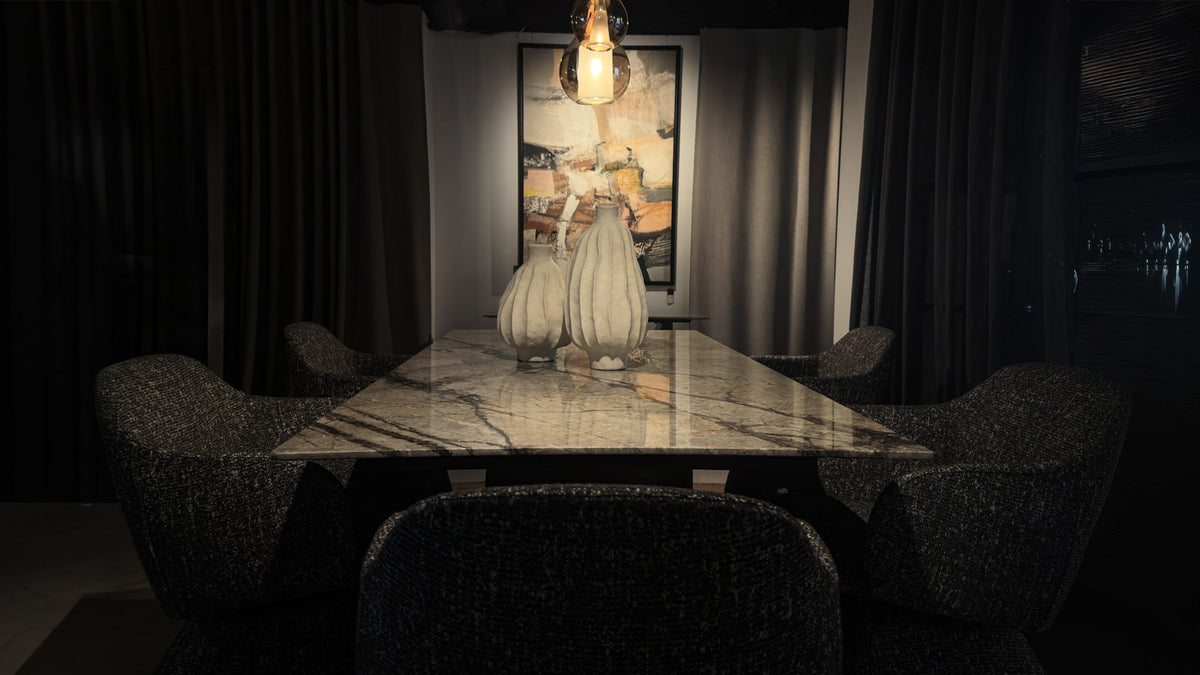
In design, marble finds its application primarily where its surface can be visible and used every day. A dining table top emphasizes the importance of gatherings, a coffee table organizes the central part of the living room, and a console with a stone element creates an elegant entrance to the home. Marble also works well as a windowsill, wall cladding, tray, bowl, lamp base, or decorative detail. In this role, it beautifully complements elegant tables, especially when their form remains serene and the stone takes on the function of the main ornament. This gives the interior a distinct yet harmonious focal point.
How to Choose Stone Color for Furniture and Decorations?
The color of marble should stem from the entire composition, not from a momentary infatuation with a single slab. For light interiors, it is worth introducing stone that will not be too contrasting, unless it is meant to serve as a dominant element. In darker living rooms, shades with stronger veining work better, as they do not get lost in the background. The proximity of wood, metal, glass, and fabrics also matters, as they determine whether the stone will resonate subtly or become the strongest accent of the arrangement. Simple rules are helpful in making a choice:
- white and grey organize space and add lightness;
- beige and brown warm up the arrangement, especially with wood;
- black creates elegant contrast and requires good lighting;
- green looks best as a single, jewel-like accent;
- distinct veining requires calmer fabrics and accessories.
Such selected elegant decorations enhance the character of the stone but do not introduce visual excess.
Marble in Furniture – Beauty with an Everyday Function
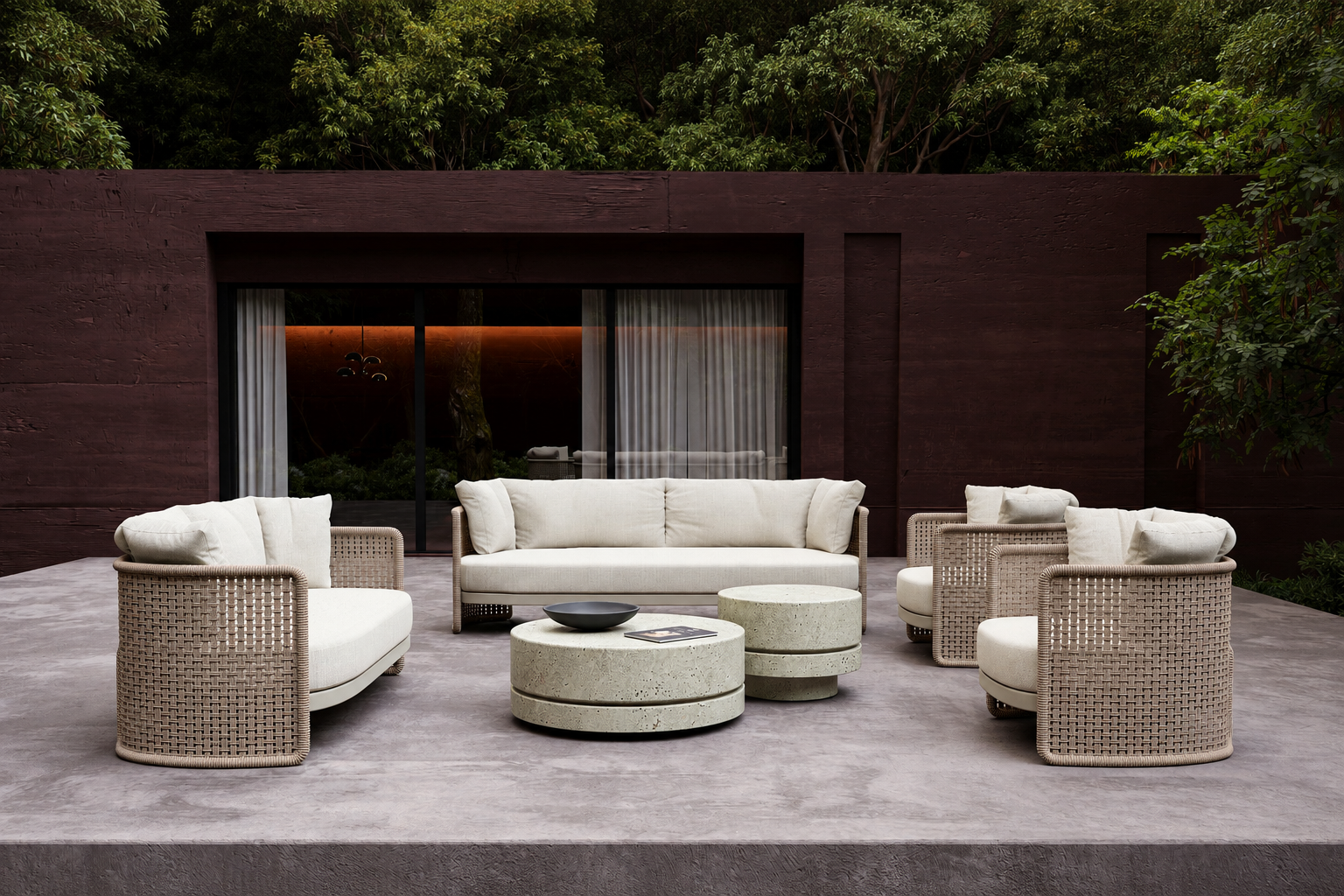
In furniture, marble demonstrates its properties in a very practical way. A tabletop, side table, or console is not only an ornament but also a solid usable surface. Stone brings weight, stability, and a sense of durability to the interior, while remaining exceptionally decorative. It harmonizes well with metal, veneer, glass, and fabrics with a noble texture. A similar material consistency can also be transferred to a terrace or orangery, where exclusive garden furniture refers to the interior's style through color, proportions, or elegant details.
How to Consciously View Marble Before Choosing?
Before purchasing, it is worth seeing the stone not only in a picture but also in the context of the furniture, light, and scale of the room. A small sample looks different from an entire slab, where the veining becomes a distinct element of the composition. A visit to a place like the AlmiDécor Showroom in Warsaw allows one to assess the proportions, finish, and the relationship of marble with fabric, wood, metal, and decorations. This is especially important when choosing a table or coffee table that is meant to serve a central function in the living room. What is marble in practice? A material best judged with all senses.
Summary
Marble fascinates because it combines natural origin, noble design, and timeless elegance. It is worth knowing how marble is formed and looks in various varieties and consciously choosing its types for the interior style. Light stones bring calm, dark ones add distinctiveness, and beiges, browns, and greens help create a more sensual, soft arrangement. Check out AlmiDécor's offer and choose furniture and accessories that will allow you to introduce marble into your home in a harmonious, elegant way, consistent with the character of your space.