Using marble in interiors
What goes well with marble? This question always arises when a noble, distinctive, and timeless material is to be introduced into an interior. Marble captivates with its veining pattern, cool elegance, and natural uniqueness, which is why it fits well in both classic apartments and modern living rooms. Marble in interiors can serve as an impressive finish, a table or coffee table top, a console, or a subtle detail that gives the arrangement a serene and luxurious character.
Table of Contents
- What goes with marble? Materials that emphasize its natural elegance
- Marble – what to combine this material with in the living room, dining room, and reception area?
- Marble in interiors as a finish – countertops, claddings, and architectural details
- Marble – what to combine it with in furniture – tables, consoles, and coffee tables with stone tops
- Marble as an accent – elegance on a smaller scale
- Marble in various styles – from classic to modern minimalism
- How to choose marble for an interior to achieve a cohesive effect?
- Summary
What goes with marble? Materials that emphasize its natural elegance
Marble looks best when paired with materials that do not compete with its pattern but instead highlight its depth. With wood, it creates a warmer, more homely composition, especially when a stone top is combined with walnut, oak, or veneer with a calm grain. Metal adds lightness and elegance – gold warms up the arrangement, chrome emphasizes modernity, and black gives the whole a distinct character. It's worth remembering that what suits marble also depends on the stone's color. White marble loves contrast, beige looks good with soft fabrics, and dark marble requires a lighter background to avoid overwhelming the room.
Marble – what to combine this material with in the living room, dining room, and reception area?
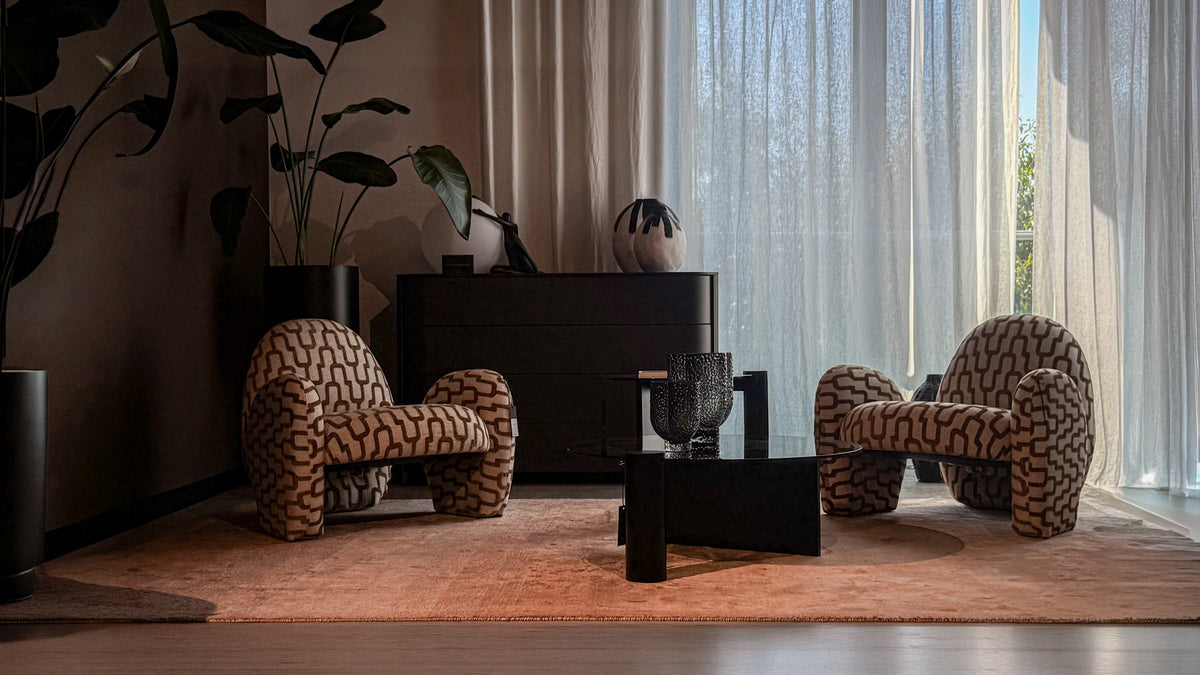
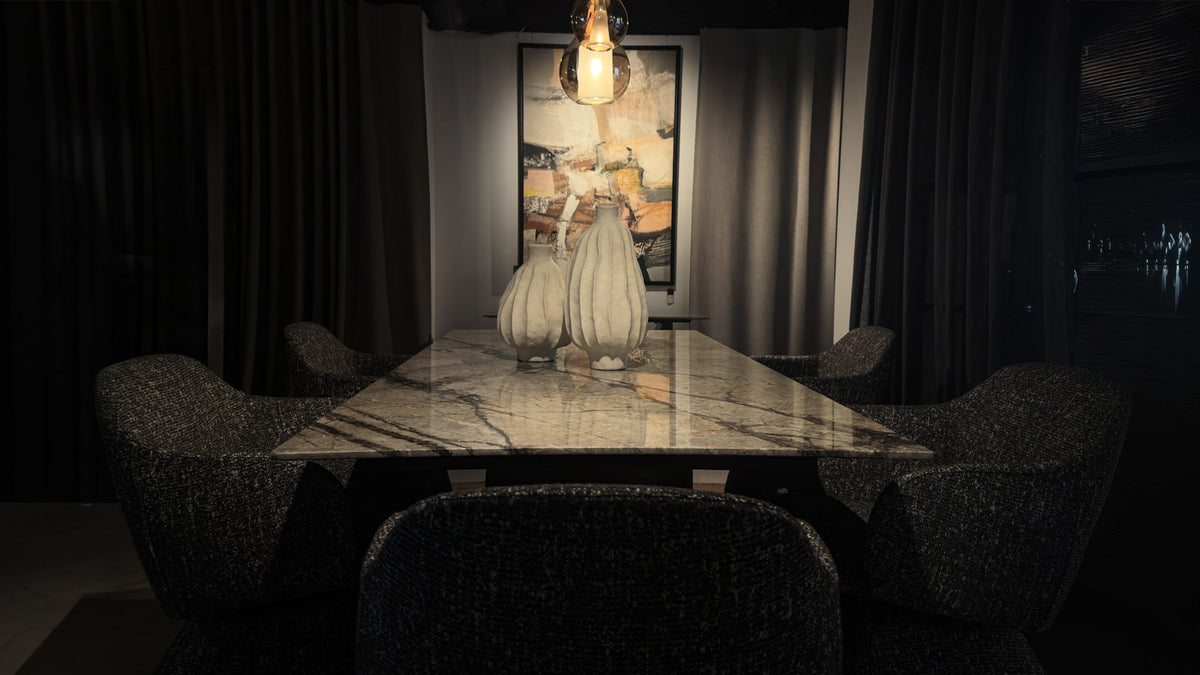
The living room and dining room are places where marble can become the main element of the composition. A table, coffee table, or console top immediately organizes the arrangement and gives it a more refined character. In this role, elegant tables that combine a stable structure with the natural beauty of stone work well. In the living room, it's also worth considering stylish coffee tables, as a marble top is decorative and practical for everyday use. If you're wondering what to combine marble with, aim for balance. For strong veining, choose calmer forms, and for simple forms, choose more expressive accessories. The following work well here:
- soft fabrics such as velvet, linen, bouclé, or high-quality wool;
- warm-toned wood that breaks the coolness of the stone;
- glass and metal, if you want lightness and a modern effect;
- ceramics, books, and sculptural accessories that build the composition on the top.
When combined in this way, marble does not dominate the interior but gives it a clear rhythm and an elegant focal point. This keeps the arrangement cohesive, and the stone element looks natural in both everyday use and in a more representative living room setting.
Marble in interiors as a finish – countertops, claddings, and architectural details
Marble in interiors doesn't have to be limited to furniture. It can appear as a kitchen countertop, wall cladding, windowsill, fireplace surround, or a decorative strip in the bathroom. In such applications, it works very elegantly because it introduces a natural rhythm and subtle shine. However, moderation is key – large marble surfaces look best in spaces where other elements are more subdued. Stone is temperature-resistant and durable but requires proper care. For everyday use, gentle cleaning with a soft cloth and mild preparations, without strong acids or aggressive abrasive agents, is best.
Marble – what to combine it with in furniture – tables, consoles, and coffee tables with stone tops
In furniture, marble has a unique advantage: it can give even a simple form a more sophisticated look. A top made of natural stone becomes a decoration in itself, so it doesn't require many embellishments. Furniture consoles with a marble finish, placed in a hallway, living room, or against a mirrored wall, look particularly good. In premium arrangements, it's worth paying attention to designer furniture where marble appears not only on the top but sometimes also in structural elements, such as more massive bases or legs. Wondering what to combine marble with? The answer often comes down to proportion: the stone should be visible, but it shouldn't dominate the entire interior.
Marble as an accent – elegance on a smaller scale
Not every interior needs a large table with a marble top. Sometimes, a lamp on a stone base, a bowl, a tray, a clock, a candlestick, or a small decorative element is enough. Such elegant decorations allow marble to be introduced subtly, without changing the entire arrangement. This is a good solution for minimalist interiors, where detail matters, but also for glamorous spaces where stone can be combined with the gleam of metal and glass. Marble also looks good in an office, bedroom, and hallway, as it adds class to the space without excessive ornamentation. At AlmiDécor, it's worth looking for solutions that combine natural material with a refined form and a cohesive color palette.
Marble in various styles – from classic to modern minimalism
The versatility of marble stems from the fact that each block of stone has its own unique pattern, color, and character. In a classic style, it harmonizes perfectly with milled fronts, gold details, and symmetry. In a glamorous arrangement, it emphasizes the effect of luxury, especially when accompanied by mirrors, glass, and gleaming metals. In minimalism, it works as a single stronger accent, for example, a coffee table top next to a smooth sofa and a light wall. In modern interiors, marble can be combined with black, simple lines, and matte surfaces. Interestingly, natural stone is increasingly moving beyond interiors – stone garden furniture and exclusive garden furniture show that noble materials also find their place in elegant outdoor lounge areas.
How to choose marble for an interior to achieve a cohesive effect?
When choosing marble, it's worth starting with the scale of the room, the light, and the colors already present in the interior. Lighter varieties of stone are better suited for small spaces, as they do not visually overburden the arrangement. Dark marble is very impressive, but it looks best where it has the right setting – good lighting, a light background, and enough space. The veining also matters. Delicate veins create a calm effect, while strong contrasts attract the eye and should have more space around them. It's also worth seeing the furniture and accessories live, which is why the AlmiDécor Showroom in Warsaw can be a good place to compare shades, textures, and proportions of individual elements.
Summary
Marble remains one of the most distinctive materials in interior design, as it combines natural beauty, durability, and elegance. It can appear as a countertop, cladding, coffee table, console, decoration, or a subtle detail that organizes the entire composition. What goes well with marble? Primarily good quality materials: wood, metal, glass, soft fabrics, and a subdued color palette. Thanks to this, marble in interiors looks noble but not excessive. Check out AlmiDécor's offer and choose furniture and accessories that will allow you to introduce natural stone into your interior in an elegant, refined form.